Ask any founder or marketing leader what drives growth, and you’ll hear a familiar set of answers: product quality, sales strategy, funding, talent. Rarely does “brand positioning” make the list. And yet, when you dig into the data on what makes some B2B companies succeed where others fail, the evidence is overwhelming: companies with strong, clear positioning consistently outperform their peers in revenue, market share, profitability, and resilience.
But here’s the challenge: “brand” can feel slippery. Is it your logo? Your tagline? Your marketing campaigns? While a polished look, a clever voice, or a culturally relevant campaign can be helpful, brand positioning isn’t about surface-level creativity. It’s about staking your claim in the market with a story that’s clear, consistent, and differentiated enough to convert interest into measurable business results.
This piece unpacks what “brand strength” really means, how to measure it, and why investing in positioning is one of the smartest moves a company can make to drive the quantifiable results they’re looking for.
First, what’s a “strong brand?”
One of the first hurdles is clarity: what do we mean by “brand,” “branding,” and “positioning”? In our work at Decoded, we define it this way:
- Company = your internal structure: people, product, operations
- Brand = the external expression of your company in the world, in other words, how people experience you
- Positioning = the intentional choices you make about the space you want to occupy in the market, and how you articulate them
A strong brand, then, is one whose message customers remember, whose product makes its customers successful, and whose marketing delivers results.
How can you measure the strength of your brand? Start with both qualitative and quantitative indicators:
- Qualitative: Can everyone on your team describe your brand in the same way? Are your customers clear on what you do and why it matters? Do your investors and board members trust your story?
- Quantitative: What’s your website bounce rate? How do your conversion rates compare to industry benchmarks? Are you paying $2 for a click but $80 for a lead—a sign that your message isn’t convincing customers that your product meets their demand?
These are the “blinking red lights” leaders often ignore. And they’re especially easy to ignore during a company’s early stages, when the burden of communicating the brand message can fall solely on its founder. But in the long run, a weak brand hides behind founder charisma to close deals. A strong brand scales beyond the founder, resonating clearly enough with customers to get them to convert across channels.
The myth that your “product speaks for itself”
It’s a comforting idea: if your product is good enough, the world will notice. But the truth is that great products are forgotten all the time. Even industry-defining innovations can fail if their story isn’t told in a way that resonates with the right customers.
Buyers don’t arrive at your website or ad already convinced. They arrive curious but cautious, and they give you seconds, not minutes, to explain why you matter.
Recent UX research shows that you have under 10 seconds to convey value before a potential customer bounces. That’s not enough time for your product to “speak for itself.”
The problem isn’t product quality. It’s messaging clarity. If you don’t articulate what problem you solve and why it matters, buyers will either misunderstand you or move on. Worse, if you don’t define your story, the market will define it for you—and the version they tell won’t be one you like.
Data from Heights Strategic Marketing backs this up.
Companies with clear messaging:
- See conversion rates jump as much as 330%
- Reduce wasted ad spend by roughly 20%
Put simply, if no one understands why your product matters, your product’s quality is irrelevant.
The real cost of confused messaging
Your brand messaging is your most important tool for communicating your positioning to customers. If that messaging is confusing, that’s a problem you should treat with the urgency it deserves. Because confusion isn’t neutral. It’s expensive.
Inconsistent or unclear messaging results in high bounce rates, lower conversions, and wasted marketing budget—up to 20% of your spend. On top of that, add the problems caused by frustrated investors and churned customers who don’t understand your value.
Forrester found that:
- 37% of B2B buyers say inconsistent internal/external messaging confuses them
- 44% say messaging often fails to address their needs
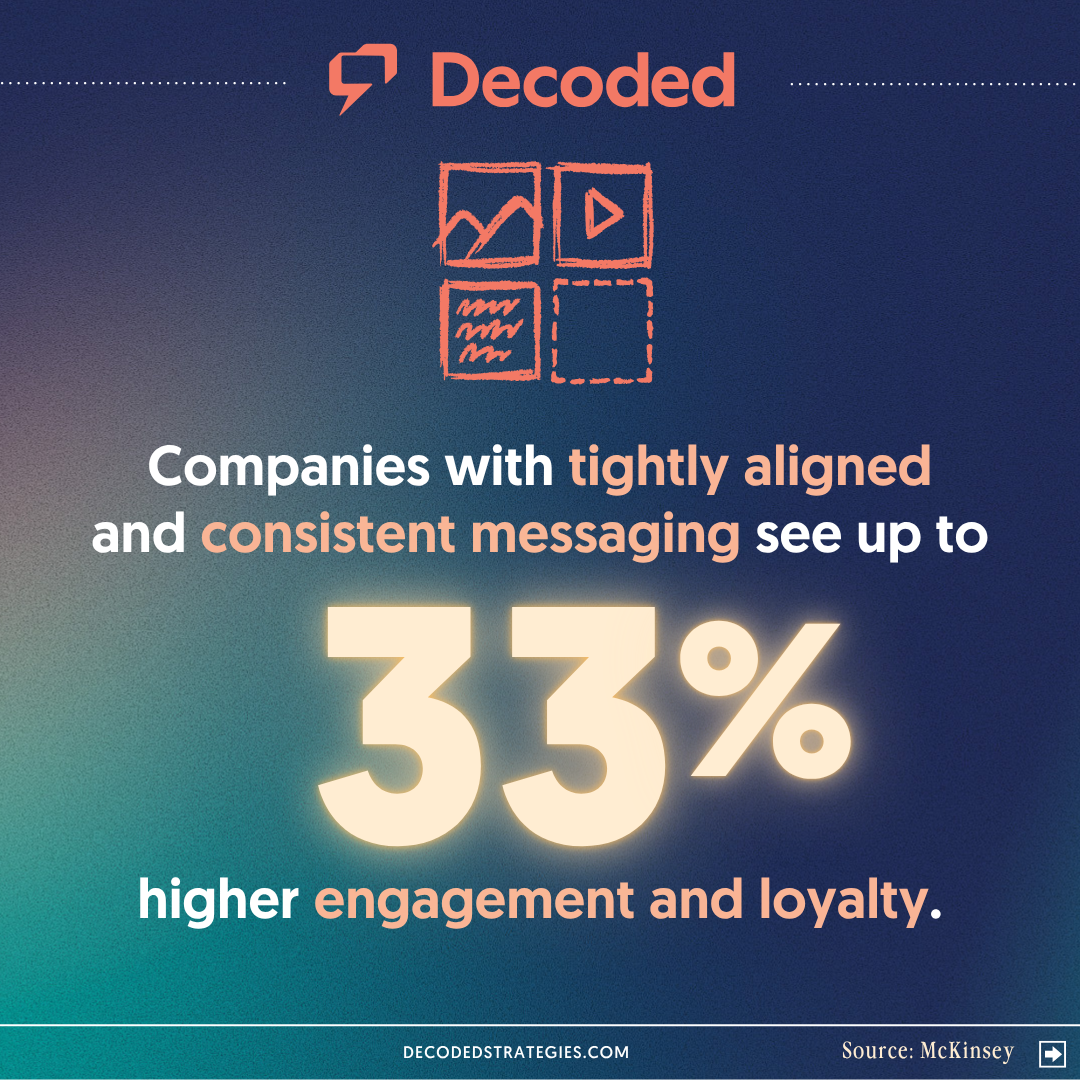
On the flip side, brands that tell one cohesive story across sales, marketing, and customer touch points see a 23% lift in conversion rates and up to 33% higher engagement.
Positioning your brand toward the right customers
When positioning is unclear, it doesn’t just slow down conversions. It often brings in the wrong kinds of customers altogether, and bad-fit customers can be more damaging than no customers at all.
Customer success experts warn that poor positioning doesn’t just limit your reach—it actively pulls in the wrong audience. These are the customers who sign contracts but churn quickly, who stretch your support teams thin, and who leave frustrated reviews that erode your reputation. LTV consultant Lincoln Murphy shared the story of a client company that lost $1.2M in revenue over three years by signing just three bad-fit clients.
The cost wasn’t just the revenue lost from churn. It was also the opportunity cost of attention pulled away from good-fit customers who could have grown into long-term advocates.
Clear positioning isn’t just about getting more customers; it’s about getting the right ones. When you define who you are and what you solve with precision, you attract customers who see your value, stay longer, and grow with you. That’s how positioning drives not just acquisition but retention and lifetime value.
Compete with your positioning, not with your price
Even in industries where innovation is happening rapidly, most buyers don’t see much difference between competitors. A recent Gartner survey found that 86% of B2B buyers perceive little real differentiation between supplier offerings.
What happens in that environment? Buyers default to price. Without a clear, distinctive value proposition, you’re pulled into a race to the bottom.
Differentiation is what keeps you out of that trap. A clear, defensible value prop doesn’t just help buyers understand what you do. It helps them understand why you’re the only logical choice. One industry benchmark study found buyers are 60% more likely to select a vendor with a distinct, easily understood value proposition.
This is where positioning earns its keep. When your story is indistinguishable from your competitors, you’re just one more option in a crowded list. But when you make the bold, intentional choice to highlight what only you can deliver, you stop competing on features and start competing on value.
The use of AI makes positioning even more important
Just a few years ago, a decent website and content marketing plan could set you apart. Not anymore. The explosion of AI-generated content has changed the game. Ahrefs reports that roughly 74% of new web pages now include AI-generated copy. Analysts say this is creating a tsunami of “commodity noise,” where every blog, email, and ad sounds the same.
In this landscape, generic messaging is more than ineffective. It’s invisible. Buyers are inundated with copy that sounds polished but empty, and their tolerance for sameness is shrinking by the day.
That’s why positioning is more critical than ever. We’ve argued for the importance of clarity in your messaging, but effective positioning isn’t just about being clear. It’s about being unmistakably you. A distinct point of view, a sharp value prop, and a bold stance are what allow you to rise above the noise. As Forbes put it, in an AI-saturated era, your brand’s unique voice is what separates leaders from lookalikes.
In this climate, positioning can act as your filter and your amplifier. It ensures that when you add your voice to the conversation, it can cut through the noise and reach your ideal customer.
Positioning = profits
The numbers are clear: strong positioning pays off.
The results of this McKinsey B2B business branding study still hold true:
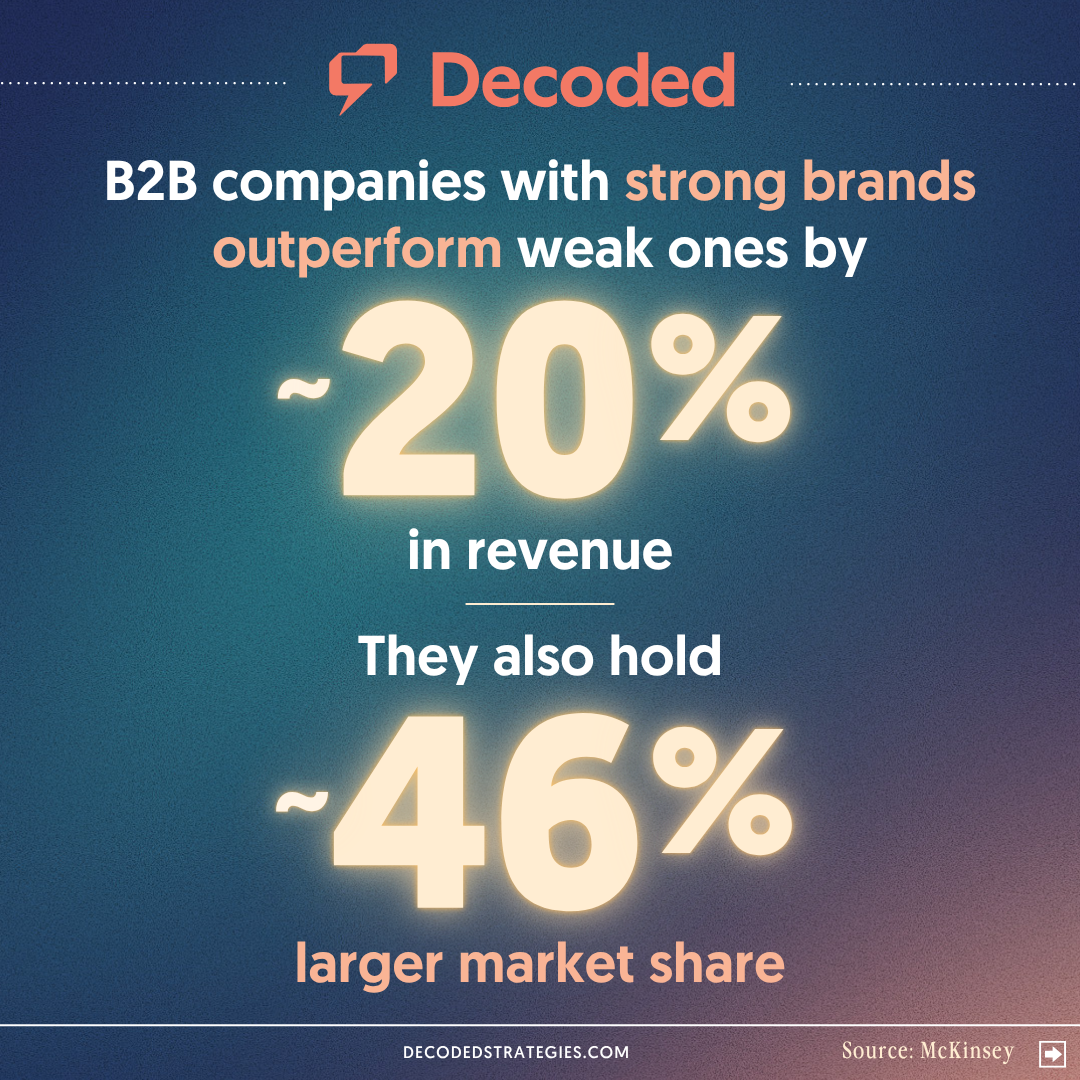
- B2B companies with strong brands outperform weak ones by ~20% in revenue
- They also hold ~46% larger market share
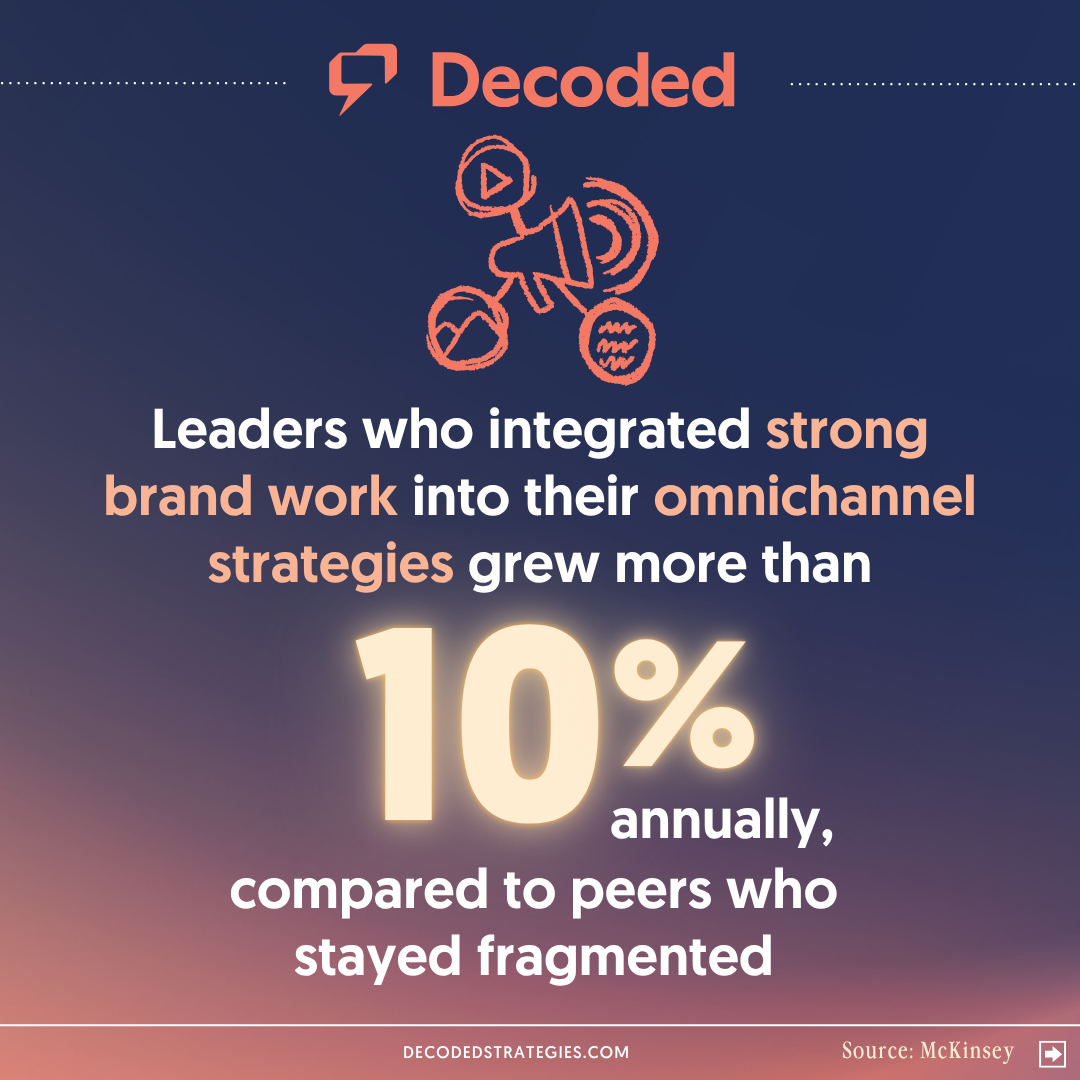
- Leaders who integrated strong brand work into their omnichannel strategies grew more than 10% annually, compared to peers who stayed fragmented
The advantages compound over time, helping strong brands build a high-value customer base. Companies with tightly aligned and consistent messaging see up to 33% higher engagement and loyalty.
Taken together, these metrics highlight that positioning is one of the most reliable levers for growth. Strong positioning doesn’t just make you look and sound better; it meaningfully boosts your performance.
Brand work is a revenue engine, not a creative exercise
For too long, brand work has been dismissed as a “soft” or “creative” activity, consisting of a logo update, a tagline brainstorm, a campaign refresh. But the companies that win treat brand positioning as a core part of their growth strategy.
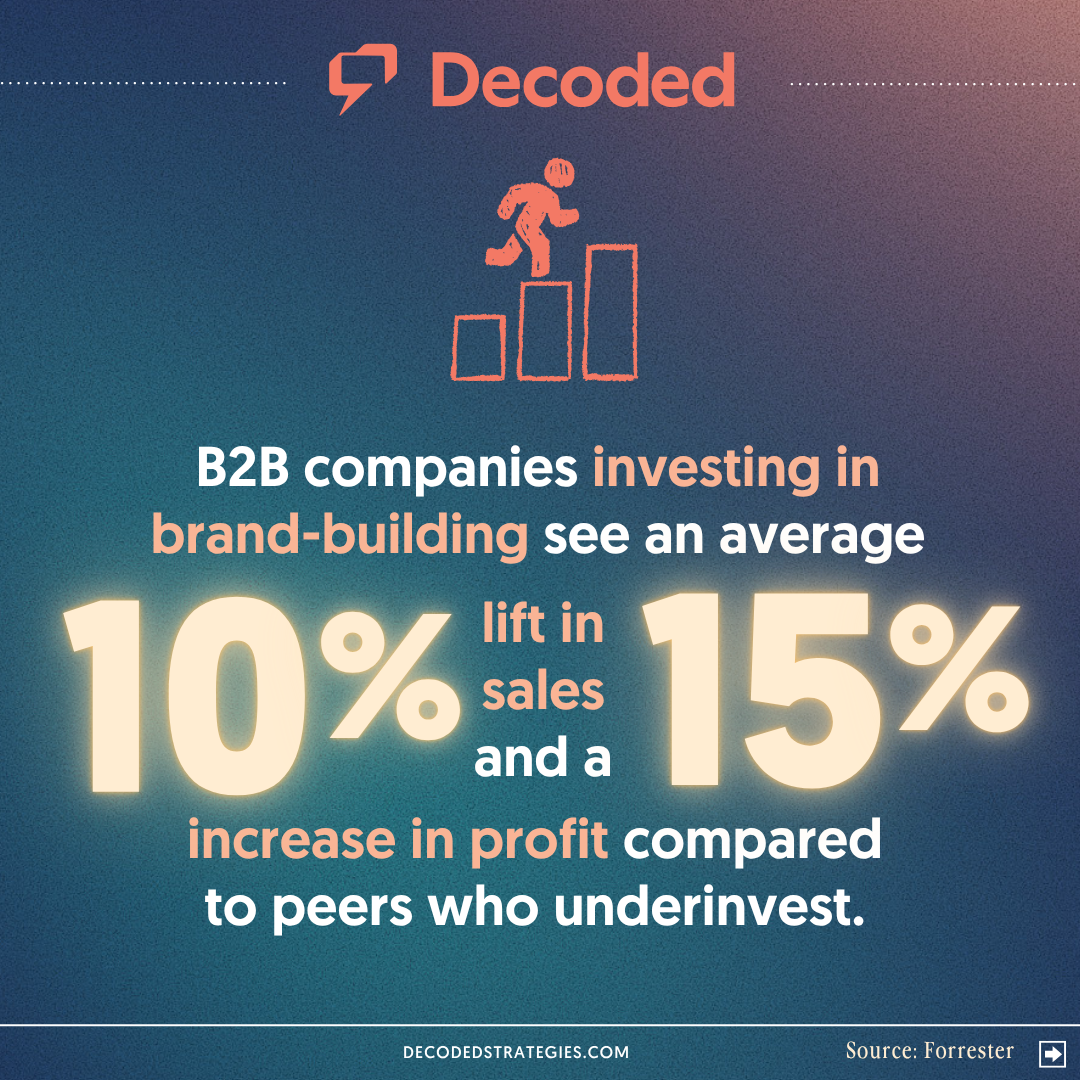
Forrester reports that B2B companies investing in brand-building see, on average, a 10% lift in sales and a 15% increase in profit compared to peers who underinvest.
BCG’s growth frameworks echo this: firms that elevate positioning from a marketing aesthetic to a business strategy accelerate pipeline velocity and increase customer lifetime value.
When you think of brand work this way, the ROI becomes undeniable. Clear positioning reduces wasted ad spend, speeds up the sales cycle, and strengthens retention—all of which directly impact your bottom line.
The takeaway: brand positioning isn’t about making your company look polished. It’s about making your company grow faster, more efficiently, and more sustainably. It’s a revenue engine hiding in plain sight.
To sum it all up
Brand positioning isn’t optional, and it isn’t cosmetic. It’s the scaffolding that holds up every dollar of growth investment, from product development to hiring to demand gen. Weak brands break under the weight of scaling; strong brands support it and grow stronger in the process.
The data makes it plain: positioning drives conversions, protects against churn, differentiates you in noisy markets, and unlocks measurable revenue gains.
So the next time you hear someone say “the product will speak for itself,” remember this: the companies that last aren’t just selling products. They’re telling stories that resonate, scale, and endure.
Ready to do the meaningful work of positioning your brand for the results you want?